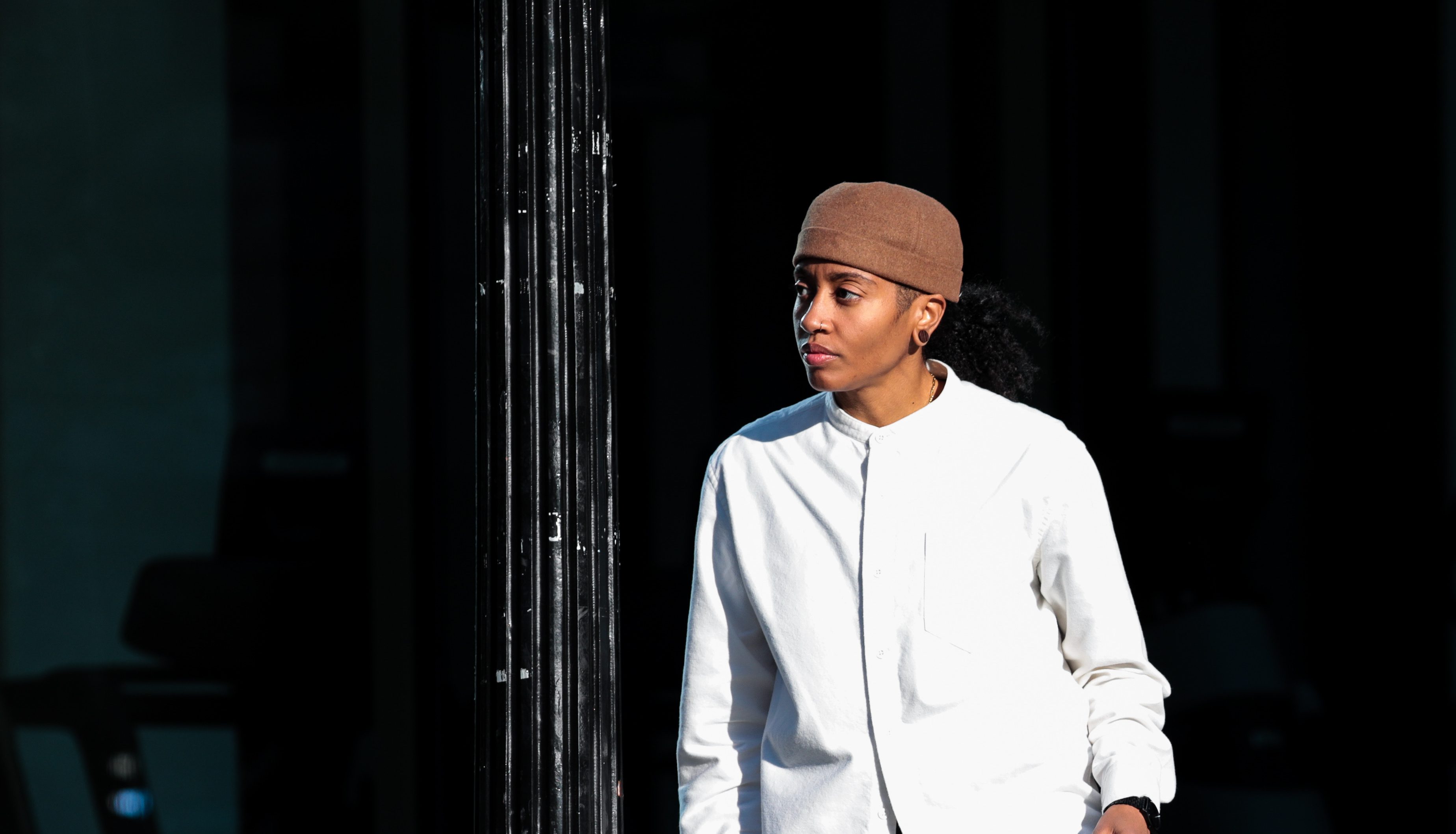
The cinéSPEAK Journal publishes a monthly Philadelphia Artist Spotlight highlighting local filmmakers and moving image artists doing unique and impactful work.
With a commitment to pushing artistic boundaries, Les Rivera has created captivating narratives in the form of short narrative films and documentaries. He worked as the director of photography for the movie adaptation of the Pulitzer Prize-winning play, Fat Ham. As an educator, Les shares low-budget filmmaking techniques on the Blatino Cineninja YouTube channel, where he also brought his award-winning feature debut, Papi Ramirez vs. Giant Scorpions, to life. Shot in a rental storage unit with clever techniques, the film showcases Les’ love for retro cinema and tells an entertaining story of a father’s extraordinary dedication to his child. Leslie Rivera’s artistic journey is fueled by a quest for excellence, a commitment to entertainment, and a desire to uncover truth through the magic of storytelling.
cinéSPEAK interviewed Puerto Rican-born writer/director Les Rivera to learn more about his passion for storytelling and entertainment.
cinéSPEAK: Given your background in dance, how did you come into filmmaking?
Les Rivera: I was dancing. We toured a lot. We had a long flight and I needed a book for the flight. I don’t know why I was drawn to it, but I picked up Robert Rodriguez’s Rebel Without a Crew. [Rodriguez] is the director of Desperado, Spy Kids…Sin City. Back in the day, he made a film called El Mariachi [which] he shot on 16mm film–an action movie–for $7,000. He basically made it himself–he was a one-man crew. He made this fun action movie that became an Audience Award winner at Sundance in ‘93 and he wrote a book about it in diary format. It was fascinating. After reading his book, I bought a SUPER VHS camera and a VCR and started making short films. I must have made 150-160 short films. I would say 99% of them were very bad. But, if you just keep doing it, they get better. That was how I got into filmmaking.
While on tour, I would do little documentaries with the guys I danced with. At home, I would enlist my brother and his friends to be in my short films. So, I was constantly filming as much as possible and editing, trying to come up with ways to make movies the way they do in Hollywood [but] with limited equipment.

cinéSPEAK: What was your creative process like making your film Papi Ramirez vs. Giant Scorpions?
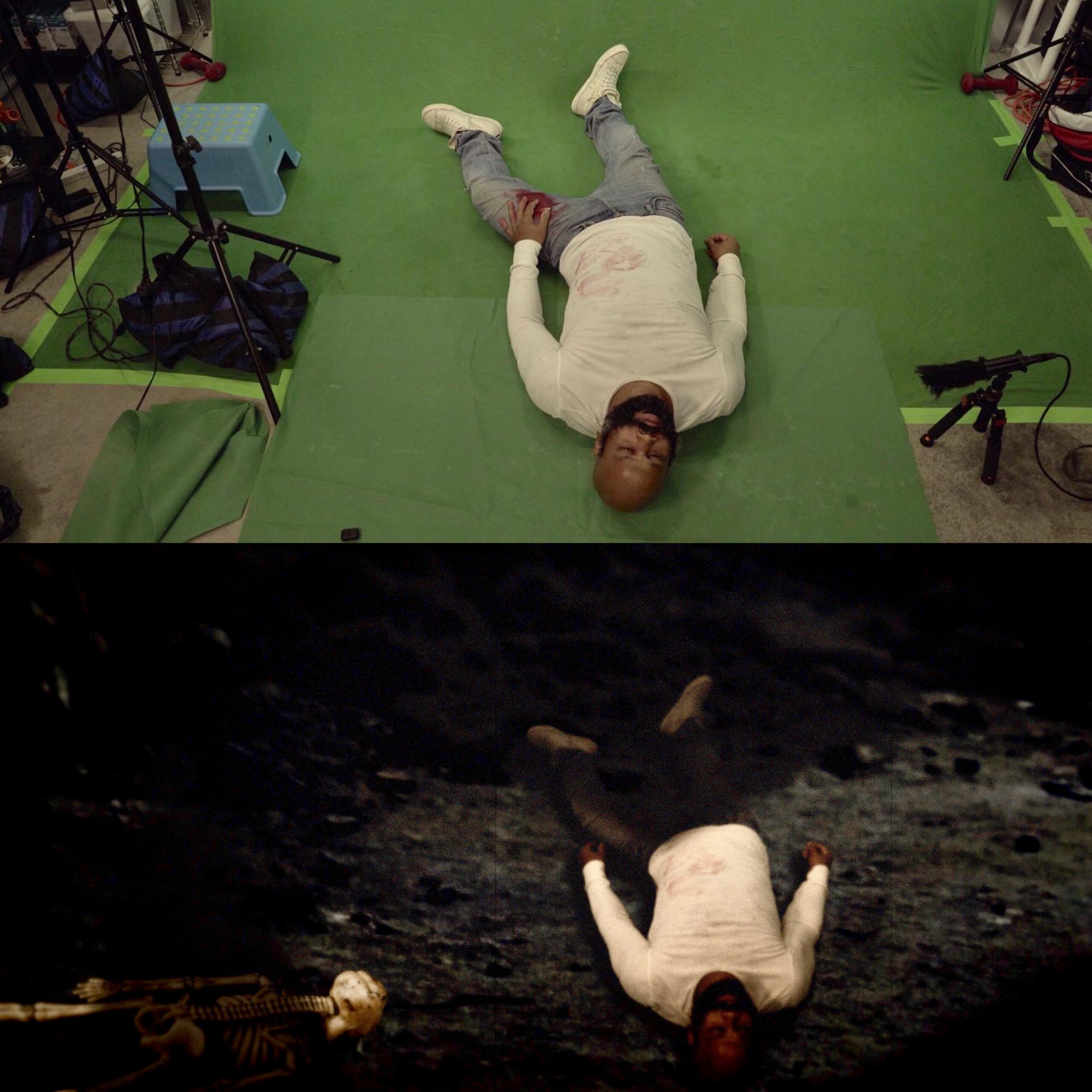
LR: There was a Friday night when I just wanted to make something. I went to my [studio] at 10 PM, thinking, “What should I do?” I wanted to do something fun. I’ve always loved The Twilight Zone and creepy stuff like that. I had gone through thrift stores and bought cheap little things; one of them was a scale model car and another was scale-sized rock formations. The idea popped into my head: “I should do something where I’m driving in the desert and I hear some mysterious creature and it’s after me, something crazy like that.” That’s what I filmed that night. It turned out to be a five-minute sequence [which] turned out pretty good. I did all the compositing and [made] it look like I was riding the car. I used stock footage for the backgrounds. I had all these different shots from different angles of the desert. And, I was able to make something. I didn’t feel like there were any barriers. I actually felt like I had a large budget. I felt like, for the first time in my filmmaking life, I was making something big. From there, I started making little scenes like that.
cinéSPEAK: What aspects of filmmaking challenge you the most?
LR: I have more of a painter’s sensibility. I really enjoy being in that storage unit by myself, just having fun and throwing paint up on the canvas. I’m trying to figure out where I can meet the reality that filmmaking is a collaborative art form. I’m working on a kid’s show with a gentleman by the name of Titus Underwood, the lead oboe player for the Nashville Symphony. I did a project for Opera Philadelphia where I directed one of their concerts during COVID-19. I became friends with the clarinet player and shared my movie with him, and he sent it to Titus. He was like, “Dude, I watched your movie and you are the director I’ve been looking for, for the last two years for a music show.” We just kicked it off, our sensibilities are very similar, and we’ve been working on a pilot for two years. I mentioned that project because I’m working with a team of about three people. To go from one to three people is a big step for me! I’m figuring it out.
cinéSPEAK: How has Philadelphia shaped and influenced the process and/or content of your work?
LR: Philadelphia has a rich and vast artistic community and it’s very easy to get swept away in the energy and creativity that permeates the city. Being a dancer and performer and rubbing elbows with artists in that world allows me to enrich my films with non-traditional and fresh ideas that I add to my filmmaking arsenal.
cinéSPEAK: Can you share more about your upcoming thriller exploring ageism?
LR: An aging secret agent is having problems going to the bathroom freely and is a little bit out of touch with the younger agents. Not only does he have to learn to get along with the youngin’s, how to work together, but also realize that it’s not over once you get to a certain age. Life continues. It’s different, but it continues.
You can watch some of Les Rivera’s work on his YouTube channel and follow him on Instagram.
*Featured Image: Image from behind the scenes of Papi Ramirez vs Giant Scorpions. Image Credit: Les Rivera.
Would you like to be featured in a future spotlight? Please fill out the Philadelphia Artist Spotlight form. The cinéSPEAK Journal maintains sole discretion over the publishing of any information provided via the form. Questions: journal@cinespeak.org
Ireashia M. Bennett (they/them) is a Philadelphia-based filmmaker, photographer, and writer whose work aims to celebrate Black queer and disabled folks in the form of new media, short films, and photoessays. They earned a B.A. in Journalism from Columbia College Chicago and are pursuing an MFA in Film and Media Arts at Temple University.