Toni Cade Bambara is in the petite pantheon of artists whose impact you’ve likely felt whether you know it or not. Her prodigious work as an acclaimed writer, filmmaker, educator, and international organizer inspired and amplified the silenced voices of Black people (especially Black women). Filmmakers Louis Massiah and Monica Henriquez, in their latest documentary TCB – The Toni Cade Bambara School of Organizing, have therefore aimed their ambition at the grandest of targets—capturing the spirit and legacy of one of the all-time most influential Black minds in 105 minutes.
Massiah is a filmmaker, activist, and founder of Scribe Video Center, where he also serves as Executive Director. He was born and raised in Philadelphia and is so homegrown that he still lives in the North Philly house his parents bought when they got married. Massiah describes this most recent project as a visual “thesis.” He says, “I wanted to make a usable film. The film is structured by these lessons which are kind of put together in chronological order, in terms of Toni’s life, of how one can use culture as a tool for…organizing, strengthening, [and] building communities.”

To manifest his vision, Massiah collaborated with co-director Monica Henriquez, a Venezuelan film director and editor based in London, who edited his previous film W.E.B. Du Bois: A Biography in Four Voices, which was released in 1996. “Because editing is such an important part of the construction of the work and sort of creating meaning, it really made sense to also name her as a co-director for the [film],” Massiah explains. It’s evident early in the runtime, from the degree of care used to portray Bambara’s humanity, that this story is extremely personal to him.
Massiah met Bambara during Scribe’s infancy, around 1985, at a book reading that she was giving at the now closed My Solitude Bookstore in Germantown. “I gave Toni a little Xerox flyer for a workshop I was going to give on video technology,” he says with a nostalgic smile. An important detour in this story is that Massiah’s academic origins are in the sciences, specifically physics and astronomy. While earning his Bachelor’s from Cornell University, he worked as a teaching assistant for renowned astronomer and scientist Carl Sagan, later graduating with his Master’s in Documentary Filmmaking from the Massachusetts Institute of Technology (MIT).

Massiah says, “All the knowledge I thought I learned from MIT, I was going to try to teach, you know, share it with people in a community setting at Scribe. Toni seemed interested in it, and then, two weeks later, knock on the door: Toni came to take the workshop, which was pretty exciting, but she was the only person that showed up to the class. And I was so embarrassed, I just apologized [and] said, ‘I am so sorry. No one has shown up for this workshop.’ And she said, ‘No one has shown up? Then who am I? I came here for a workshop.’ And so I taught my workshop for two hours.”
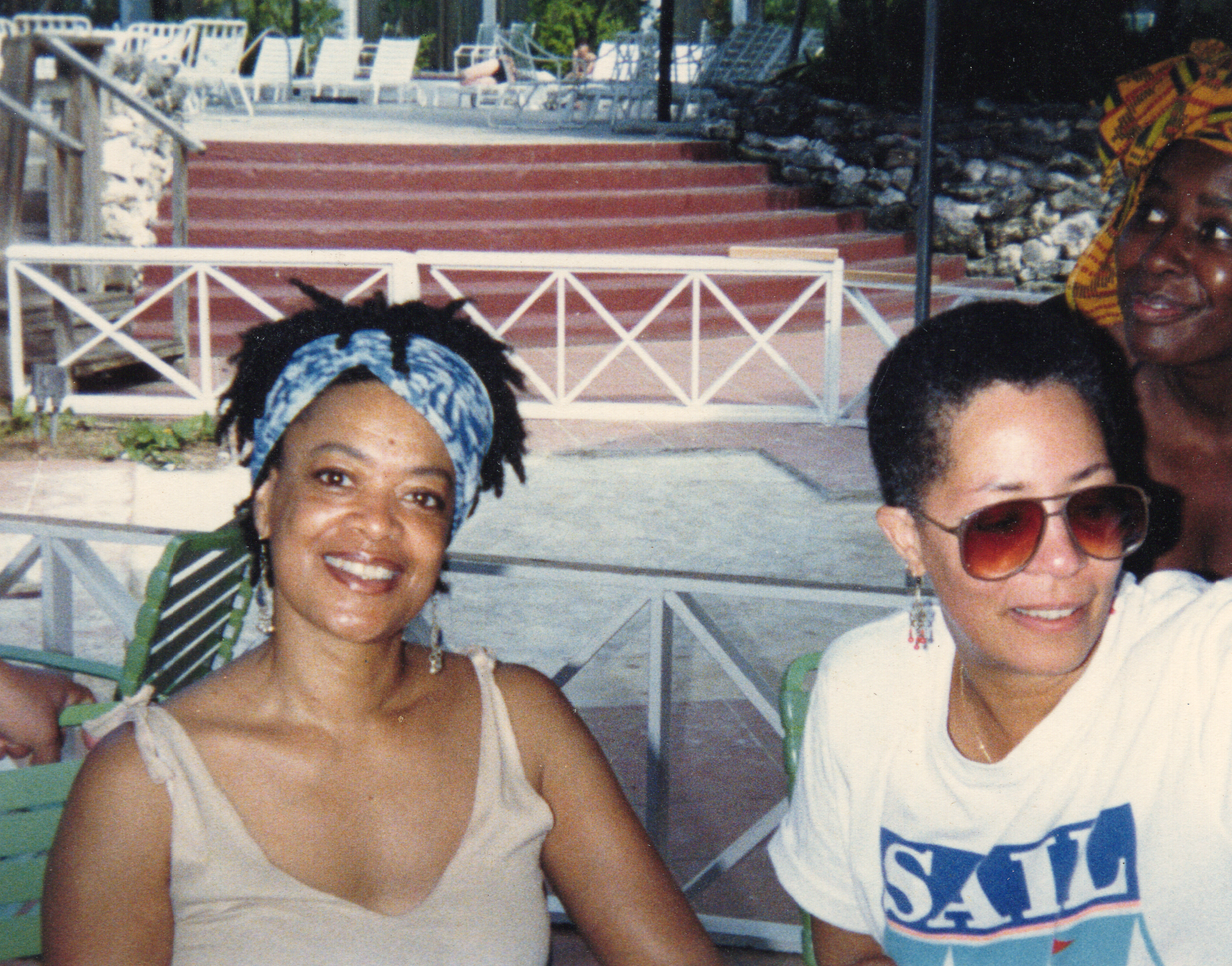
If you are a (Black) lover of writing, this film is a must watch; there has not been an assembly of heroes on screen this fantastic since Marvel’s Avengers. In one sequence, we see a sisterhood of Black women literary icons—including Lucille Clifton, Ntozake Shange, and Octavia Butler—and watching them engage, listen, laugh, share, and hold each other is a necessary reminder that these stars, engoldened by time, did not become great in isolation. They were friends, sisters, colleagues, and comrades. Sonia Sanchez and the late Toni Morrison are both here as well. Morrison, being one of Bambara’s closest friends and collaborators, is prominently featured in the film, and she speaks intimately about their friendship, Bambara’s disinterest in fame and wealth, and her steadfast dedication to creating space for those who have historically been denied it.

Both a biographical and pedagogical tool, TCB – The Toni Cade Bambara School of Organizing is a curation of thorough research, rare archival footage, and interviews of Bambara’s closest family and friends. The film constructs a clear narrative around her life and ethos, starting from her childhood in New York, covering her time as an organizer and professor in Atlanta, and concluding with her premature death in Philadelphia. It’s grimly ironic that cancer, a disease in which cells violently turn on each other, expedited Bambara’s passing when her entire life was devoted to connection and collaboration. Thankfully, the film doesn’t languish in the details of her departure and instead offers an ending in alignment with Bambara’s focus on revolutionary hope—a tearjerking poetic letter written and delivered by celebrated poet Nikky Finney, one of Bambara’s dearest protégés.
“In Philadelphia, there’s an invisibility to Blackness, to Black individuality, that I think is particular to Philadelphia…[it] doesn’t feel that way in New York…Chicago…Atlanta,” Massiah asserts. “I feel that sometimes the way things are organized here, we don’t see each other…even with Black leadership…[and] I think we need to be able to see each other. We need to be able to see the culture. We need to be able to see our communities and honor them and respect them in order to build and go further…I think that’s one of the reasons that I’ve made some of the films that I’ve made.”

“Community” is one of the most abused words in today’s English usage, often employed but rarely defined. For Massiah, like Bambara, “community” isn’t a buzzword or abstract theory but an intentionally nourished network of relationships strengthened by the exercise of coming together and sharing knowledge. “I’m really happy that the film will be seen outdoors,” Massiah remarks. “That means a lot…I like films that are shown in neighborhood settings.” Communal screenings, especially those that are accessible in public areas, such as cinéSPEAK’s Under the Stars Film Festival (where the documentary is slated to screen this June), were a beloved part of Bambara’s “artivist” work. Congregating with neighbors in a city park to watch TCB – The Toni Cade Bambara School of Organizing isn’t just a pleasurable way to spend an evening; it’s a practical means of manifesting, honoring, and preserving Bambara’s enduring legacy.
TCB – The Toni Cade Bambara School of Organizing is screening at cinéSPEAK Under the Stars in Clark Park on Friday, June 19, 2026. The film will be preceded by the short film #FreeBlackMamas: Hear Her Voice. RSVP for free to receive up-to-date information and discounts at participating businesses.
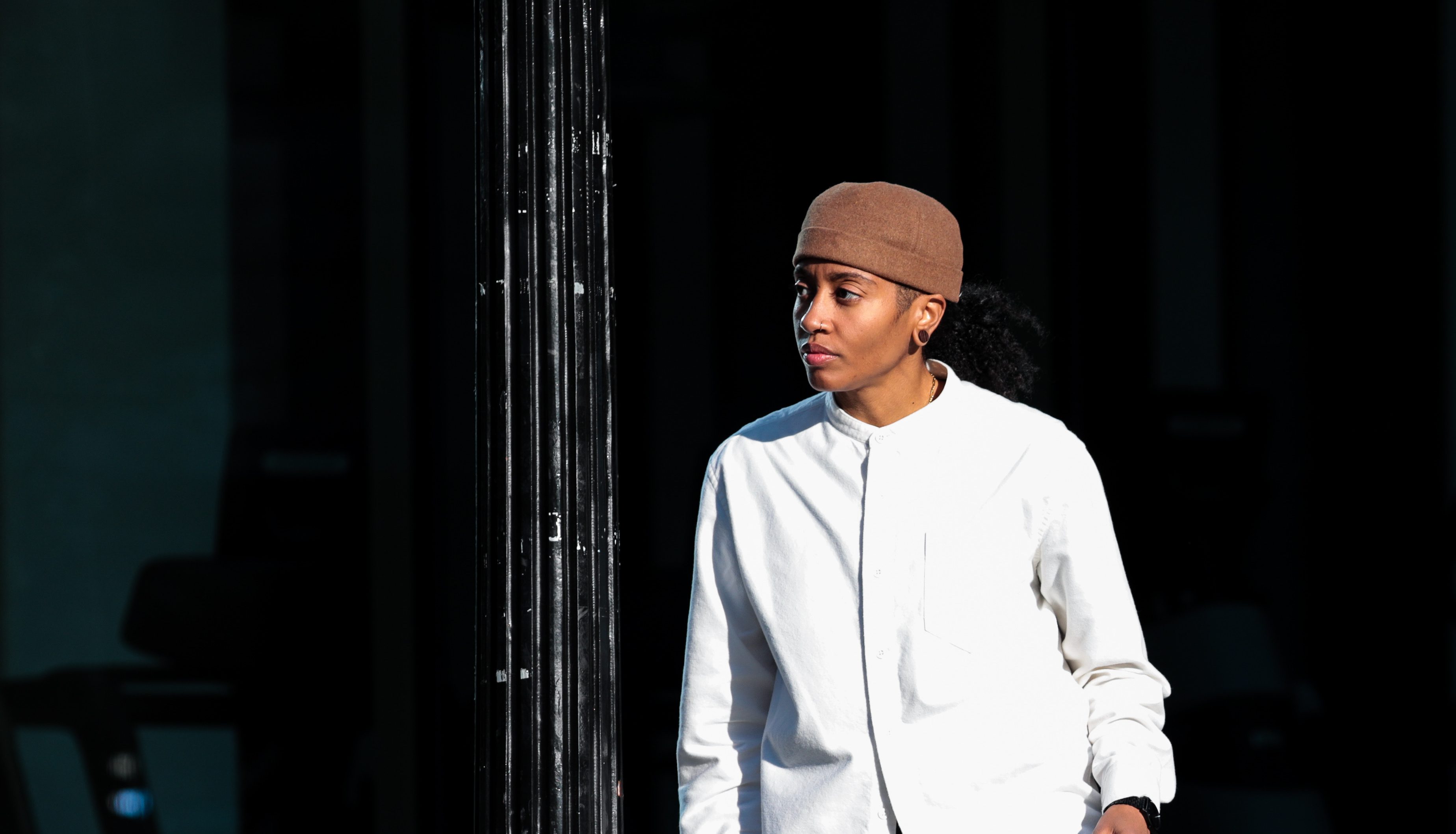
*Featured Image: Still from TCB – The Toni Cade Bambara School of Organizing. Courtesy of BlackStar.

David A. Gaines (he/they) is a poet, director, actor and educator born and based in Philadelphia. As an award-winning, nationally touring poetry performer and Poet Laureate of Pennsylvania’s Montgomery County, their work has been featured in several publications including The New York Times, Philadelphia Inquirer, VICE Media, and Button Poetry, among many others. Gaines is a 2026 cinéSPEAK Philly Cultural Critics Fellow.